A practical guide to structural steel fabrication in Dubai — the right grade for the right application, coating systems that survive the UAE climate, and the quality checks that protect your project.
Dubai's combination of 45°C summer temperatures, 90%+ coastal humidity, salt-laden air, and UV intensity creates one of the world's most demanding environments for structural steel. Fabrication decisions made in an air-conditioned office often perform very differently 12 months into Gulf Coast exposure.
Here's what 23 years of fabricating steel in this environment has taught us.
Selecting the Right Steel Grade
Mild Steel (S275 / A36)
The workhorse of general fabrication. Good weldability, reasonable strength, widely available in Dubai.
Use it for: Internal structures, machinery bases, mezzanine floors, tool steels, general brackets.
Don't use it for: Any outdoor application without adequate corrosion protection. Uncoated S275 will show surface rust within weeks in coastal Dubai.
High-Strength Steel (S355 / A572 Gr50)
25% stronger than S275, allowing thinner sections for the same load — which reduces weight and often cost.
Use it for: Crane booms, heavy-duty racking, long-span beams, anything where weight matters.
Don't use it for: Applications requiring extensive welding without a proper Welding Procedure Specification (WPS). S355 has stricter preheat requirements than S275.
Structural Hollow Sections (SHS, RHS, CHS)
Square, rectangular, and circular hollow sections are increasingly popular in Dubai because they:
- ✓Look cleaner architecturally
- ✓Have higher torsional stiffness than open sections
- ✓Resist vandalism and accidental damage better than I-beams
Critical consideration: Ensure end caps are seal welded. An open hollow section collects water internally and corrodes from the inside — invisible until the structure fails.
Stainless Steel (Grade 304 vs 316)
Both are austenitic stainless, but the difference matters enormously in coastal Dubai:
- ✓Grade 304: Contains 18% chromium, 8% nickel. Adequate for most indoor applications.
- ✓Grade 316: Adds 2% molybdenum. Critical for marine environments, pools, food processing, and any outdoor application near the coast.
Real case: A property developer specified 304 stainless for outdoor balustrades at a Marina building. Within 18 months, tea staining and pitting appeared. Replacement in 316: AED 380,000. The cost difference at specification: AED 22,000. Never use 304 within 5km of the coast outdoors.
Corrosion Protection: Getting It Right First Time
Hot-Dip Galvanizing (HDG)
The gold standard for outdoor mild steel. The fabricated section is dipped in molten zinc, forming a metallurgical bond that provides 25–40 years of protection in normal outdoor conditions.
Design for galvanizing:
- ✓Provide vent holes (10mm minimum) in hollow sections — sealed sections explode in the zinc bath
- ✓Avoid overlapping surfaces where zinc can't penetrate
- ✓Specify minimum 45µm coating thickness (UAE climate warrants 85µm or above)
What happens without vent holes: We've seen structural tubes arrive for galvanizing with no holes specified. One tube exploded in the bath, spraying molten zinc. Always specify holes.
Thermal Spray Zinc (Metallizing)
Applied by spraying zinc or aluminium onto the surface. Useful for large structures too big for the galvanizing bath, or for repairs to galvanized coatings.
Epoxy and Polyurethane Coating Systems
For structures that can't be galvanized, or where colour and aesthetics matter:
Standard heavy-duty system:
- ✓Blast clean to Sa 2.5 (near-white metal)
- ✓Zinc epoxy primer: 60–75µm DFT
- ✓High-build epoxy mid-coat: 80–100µm DFT
- ✓Polyurethane top coat: 50–75µm DFT
- ✓Total DFT: 190–250µm
Marine and coastal system:
- ✓Blast clean to Sa 3 (white metal)
- ✓Inorganic zinc silicate primer: 75µm
- ✓High-build epoxy: 125µm × 2 coats
- ✓Aliphatic polyurethane: 75µm
- ✓Total DFT: 350µm+
What people get wrong: Specifying DFT on the drawing without specifying surface preparation standard. A 250µm coating on a poorly prepared surface (St 2 brush clean) will fail within 2 years. The same system on Sa 2.5 blast will last 15+ years.
Weld Quality in Structural Steel
All structural steel fabrication should comply with a recognised standard. The three most common in Dubai:
AWS D1.1 (American): Common in oil & gas and industrial projects.
BS EN 1090 (European): Required for projects under CE marking requirements, increasingly common in commercial construction.
ISO 3834: Quality management for fusion welding — specifies what the fabricator must have in place, not just what the welds should look like.
Our certification: We maintain qualified welders and current Welding Procedure Specifications (WPS) for structural carbon steel, stainless steel, and aluminium.
The Fabrication Process — From Drawing to Delivery
1. Drawing review and steel schedule We check for missing dimensions, unclear tolerances, and fabricability issues before any steel is ordered. Problems caught here are free to fix. Problems found during fabrication are expensive.
2. Material procurement and certification All structural steel should come with a mill certificate (EN 10204 3.1 minimum). We keep copies on file — if an inspector asks for material traceability six months later, we can provide it.
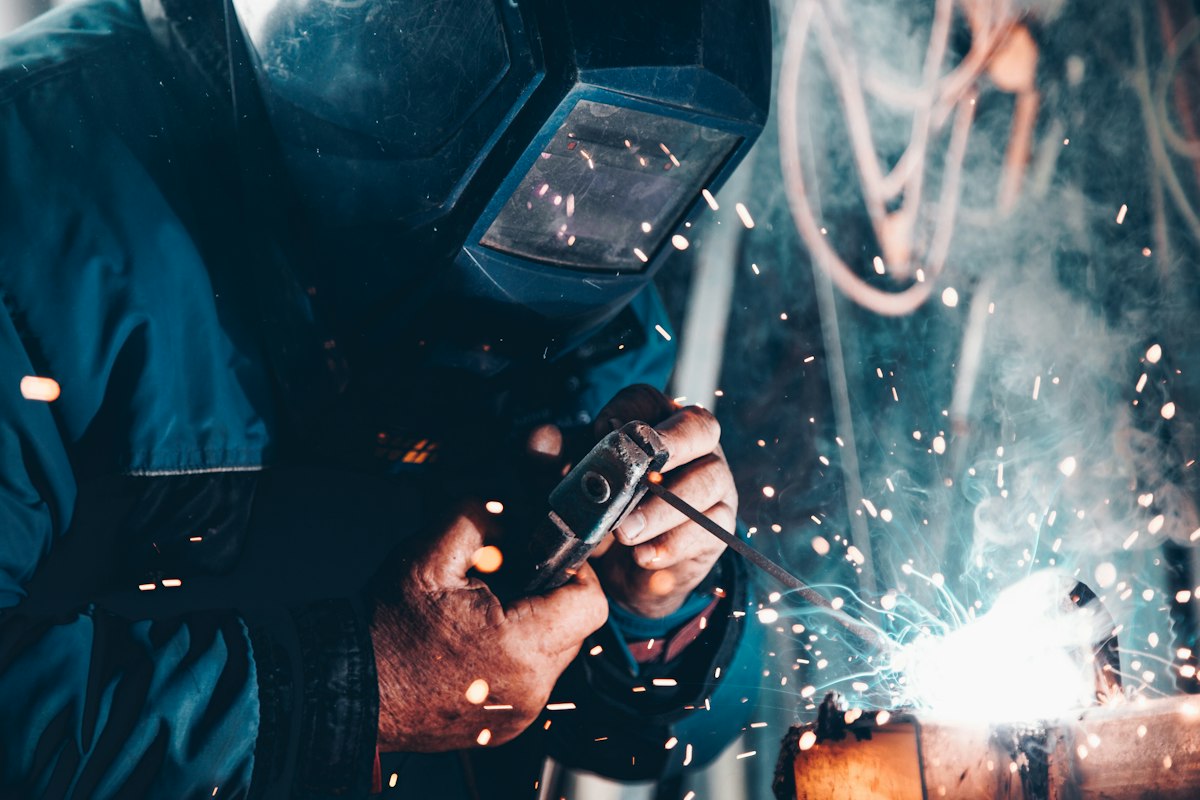
3. Marking out and cutting Laser cutting for flat profiles (fastest, cleanest). Plasma for thick structural sections. Saw for heavy bar and solid section.
4. Fit-up and tacking Before welding, all components are fitted and checked for square, plumb, and dimensional accuracy. Changes are easy at this stage. Changes after welding require grinding and re-welding.
5. Welding to approved WPS Weld sequence matters for distortion control. Long seams are backstep-welded. Symmetrical structures are balanced-welded (alternate sides) to minimise bow.
6. Post-weld inspection Visual inspection minimum. PT or MT for critical joints. UT on full-penetration butt welds if specified.
7. Surface preparation and coating Done in our workshop or at a galvanizing sub-contractor, always before delivery.
8. Delivery Documented delivery note with material certificates, weld records, and inspection reports.
Need a steel fabrication quote? Email drawings to sales@altaefengineering.ae or WhatsApp +971 56 671 8356. Most quotes turnaround in 24 hours.
Need Expert Engineering Solutions?
Get in touch with AL TAEF Engineering for all your machining and fabrication needs
Contact Us Now